Table of Contents
- Nikke’s Retention Mechanics: Overview
- How Nikke’s Gacha System and Pity Mechanic Drive Long-Term Engagement
- Character Design as a Retention Mechanism in Nikke
- Daily Login Rewards and Habit-Forming Loop Design
- Limited-Time Events and FOMO: How Nikke Creates Urgency
- How Nikke’s Ongoing Narrative Creates Long-Term Player Investment
- What Nikke Gets Right That Most Gacha Competitors Miss
- Frequently Asked Questions: Goddess of Victory Nikke
Goddess of Victory: Nikke has maintained a large global player base since its 2022 launch. Four years later, it’s still generating significant revenue and growing its community. In a market where most mobile games disappear within weeks, that’s worth examining closely.
Nikke’s retention isn’t accidental. It’s the result of layered, interdependent mechanics — gacha design, character attachment, daily structure, narrative investment, and FOMO engineering — that work together rather than in isolation.
Understanding how Nikke keeps players coming back is a window into how modern mobile game design works at its most sophisticated level./8

Nikke’s Retention Mechanics: Overview
Before the detail, the full picture:
| Mechanic | What It Does | Psychological Trigger | Retention Effect |
| Gacha + Pity System | Randomised pulls with guaranteed top-tier at threshold | Excitement + safety net | Sustained spending and pull engagement |
| Character Attachment | Unique stories, voice acting, Outpost relationships | Emotional investment | Retention beyond mechanical loops |
| Daily Login Rewards | Escalating rewards for consecutive daily returns | Loss aversion | Daily habit formation |
| Limited-Time Events | Exclusive characters available only during set windows | FOMO | Active engagement during event periods |
| Ongoing Narrative | Regular story chapter releases with genuine stakes | Narrative investment | Habitual return to follow story |
| Collaboration Events | Crossover content from anime/gaming franchises | External fandom connection | New player acquisition + existing player engagement |
How Nikke’s Gacha System and Pity Mechanic Drive Long-Term Engagement
Nikke operates on a gacha model: players spend in-game currency — earned through play or purchased — to receive randomised character pulls from a rotating pool. The term comes from Japanese capsule vending machines, and the mechanic has become the dominant monetisation model in mobile gaming globally.
What makes gacha sustainable is the pity system. Players who haven’t received a top-tier character within a defined number of pulls are guaranteed one. In Nikke’s implementation:
- The uncertainty of each pull creates genuine excitement
- The pity guarantee prevents the frustration that would drive players away entirely
- Thresholds are set high enough that significant currency is typically spent before triggering them — but not so high that the system feels punitive
The result is a cycle where players engage with the gacha regularly, experience genuine wins through randomness, and maintain a fallback expectation that sustained play will eventually deliver the characters they want. Uncertainty and safety net, engineered together.
Character Design as a Retention Mechanism in Nikke
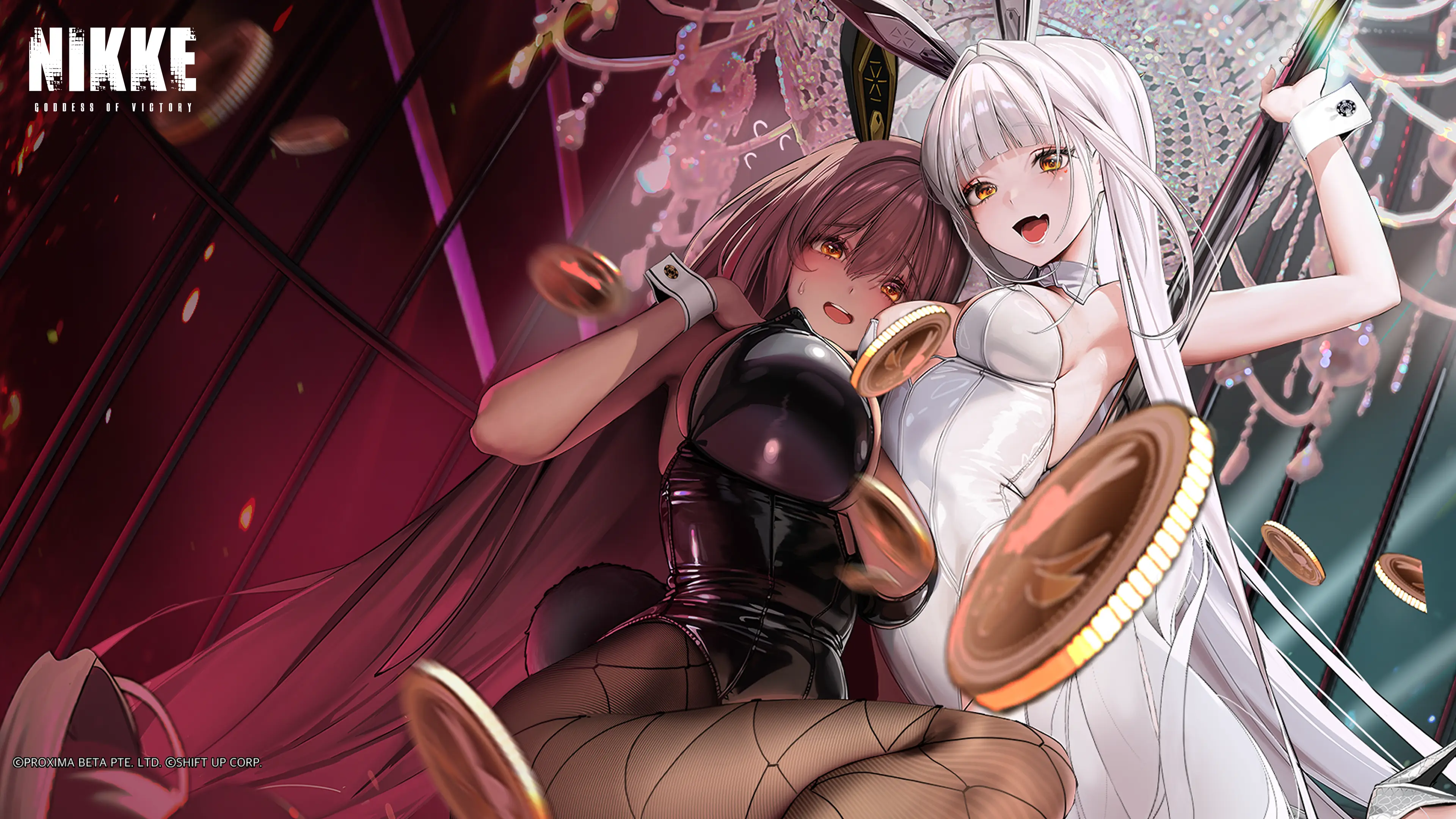
What separates Nikke from most gacha competitors is the investment its developers have made in individual character identity. This isn’t cosmetic depth — it functions as a retention layer that operates differently from mechanical incentives.
Each character has:
- A distinct visual design and full voice acting
- A personal storyline that develops through the game’s narrative
- A relationship arc with the player, tracked through the Outpost system
The Outpost system allows players to interact with collected characters in a personal space outside combat. Relationships level up over time, unlocking dialogue and story content. Players who have invested in a character’s story, farmed their upgrade materials, and built playstyles around their abilities have created stakes that go beyond the game’s systems.
They’re retained by attachment — the same force that keeps people returning to serialised television or ongoing book series. Shift Up’s background in visual novel and character-driven development shows in how deliberately this is executed.
Daily Login Rewards and Habit-Forming Loop Design
Nikke’s retention loop is built around daily engagement rather than session depth. The game doesn’t demand hours — it demands regularity.
The daily structure includes:
- Daily missions that reward regular but brief sessions
- Stamina systems that limit how much content can be consumed per day — creating a natural stopping point and a reason to return tomorrow
- Consecutive login rewards that increase in value with each successive day
The consecutive login mechanic is particularly effective. Breaking a streak feels like a genuine loss — not because of any objective harm, but because the accumulated value of the streak creates a reference point against which its absence registers as deprivation. This is loss aversion operating exactly as behavioural economists describe it, engineered into a reward calendar.
These same engagement principles can be found across many digital platforms, including Richard Casino, where regular promotions, loyalty incentives, and recurring rewards are designed to encourage consistent participation. A player who logs in for ten minutes daily has maintained their investment in the game’s ongoing content cycle. That’s the design intent — and it works.
Limited-Time Events and FOMO: How Nikke Creates Urgency
Nikke runs a continuous cycle of limited-time events: story chapters, collaboration events with anime and gaming properties, seasonal content, and special banners featuring exclusive characters available only during defined windows.
The exclusivity is structural. Characters introduced on limited banners are typically unavailable after the banner period ends, or return only infrequently. Players who miss a wanted character experience the specific discomfort of a closed window — and learn, for the next event, that active engagement is required.
This is FOMO as a deliberate design tool. Nikke’s implementation is more effective than most because character attachment mechanics give limited-time characters genuine desirability beyond their gameplay utility. Missing a character with a compelling storyline feels qualitatively different from missing a stat upgrade.
Collaboration events deserve specific mention. Nikke has run crossovers with major anime franchises, bringing characters and storylines from external properties into the game. These events:
- Attract players from the collaborating property’s fanbase who might not otherwise engage with Nikke
- Give existing players content that connects to their broader cultural interests, deepening the game’s relevance to their lives
Converting collaboration event visitors into retained long-term players is a measurable business strategy. The creative execution makes it feel natural.
How Nikke’s Ongoing Narrative Creates Long-Term Player Investment
Nikke’s story — set in a post-apocalyptic world where humanity has been driven underground by mechanical invaders called Raptures, with android soldiers called Nikkes fighting to reclaim the surface — is considerably more developed than the average mobile game narrative.
Story chapters are released regularly. The main narrative has genuine dramatic stakes. Character arcs develop meaningfully over time.
This matters for retention because narrative investment behaves differently from mechanical investment. A player who has completed all current story content is waiting for the next chapter because they want to know what happens — not because of a reward structure. The game has created the same forward momentum as a serialised story, which means it benefits from the same habitual return behaviour that serialised fiction has always generated.
A structural advantage: new players can access the entire story archive. This gives the game depth that makes it more attractive to late arrivals, not less — unlike games where story is primarily a vehicle for introducing new mechanics rather than a genuine narrative offering.
What Nikke Gets Right That Most Gacha Competitors Miss
The mobile gacha market has many games with similar surface mechanics. What Nikke does differently is integrate them with content players find genuinely worth engaging with.
- The gacha loop retains players mechanically
- The character design retains them emotionally
- The narrative retains them intellectually
- The daily structure gives them a reason to return without demanding more time than a busy life allows
These layers aren’t independent — they reinforce each other. A player emotionally attached to a character engages more actively with that character’s limited event. A player invested in the narrative maintains daily engagement to stay current with story releases. The systems are designed to compound, not to sit alongside each other.
That systemic coherence — mechanics designed as a system rather than a feature checklist — is what separates genuinely durable mobile games from those that burn bright and disappear. In 2026, four years after launch, Nikke is still here.
Frequently Asked Questions: Goddess of Victory Nikke
Is Goddess of Victory: Nikke pay-to-win?
Nikke is a gacha game where paid currency can accelerate character acquisition. Most story content and the majority of gameplay modes are accessible to free-to-play players who engage consistently with daily missions and event content. Competitive PvP modes are where spending advantage is most pronounced.
What is the pity system in Nikke?
The pity system guarantees a top-tier (SSR) character within a defined number of pulls if one hasn’t been received through normal randomness. It prevents extended losing streaks that would drive players away, while still generating spending through the pulls required to approach the threshold.
How often does Nikke release new content?
Nikke follows a regular content cadence with new story chapters, events, and character banners released on a structured schedule. Major collaboration events and seasonal content add additional content windows throughout the year.
Is Nikke a good game for new players starting in 2026?
Yes. New players can access the full story archive from the beginning, which is a significant advantage over games where early content has been rotated out. The game regularly runs beginner-friendly campaigns that provide starter characters and resources to help new players establish a viable roster.
What makes Nikke different from other gacha games?
The primary differentiator is character depth. Most gacha games treat characters as gameplay units with visual design attached. Nikke invests in individual character storylines, voice acting, and relationship systems that create genuine emotional attachment. Combined with a developed overarching narrative, this gives the game retention hooks that operate independently of its mechanical systems.