Table of Contents
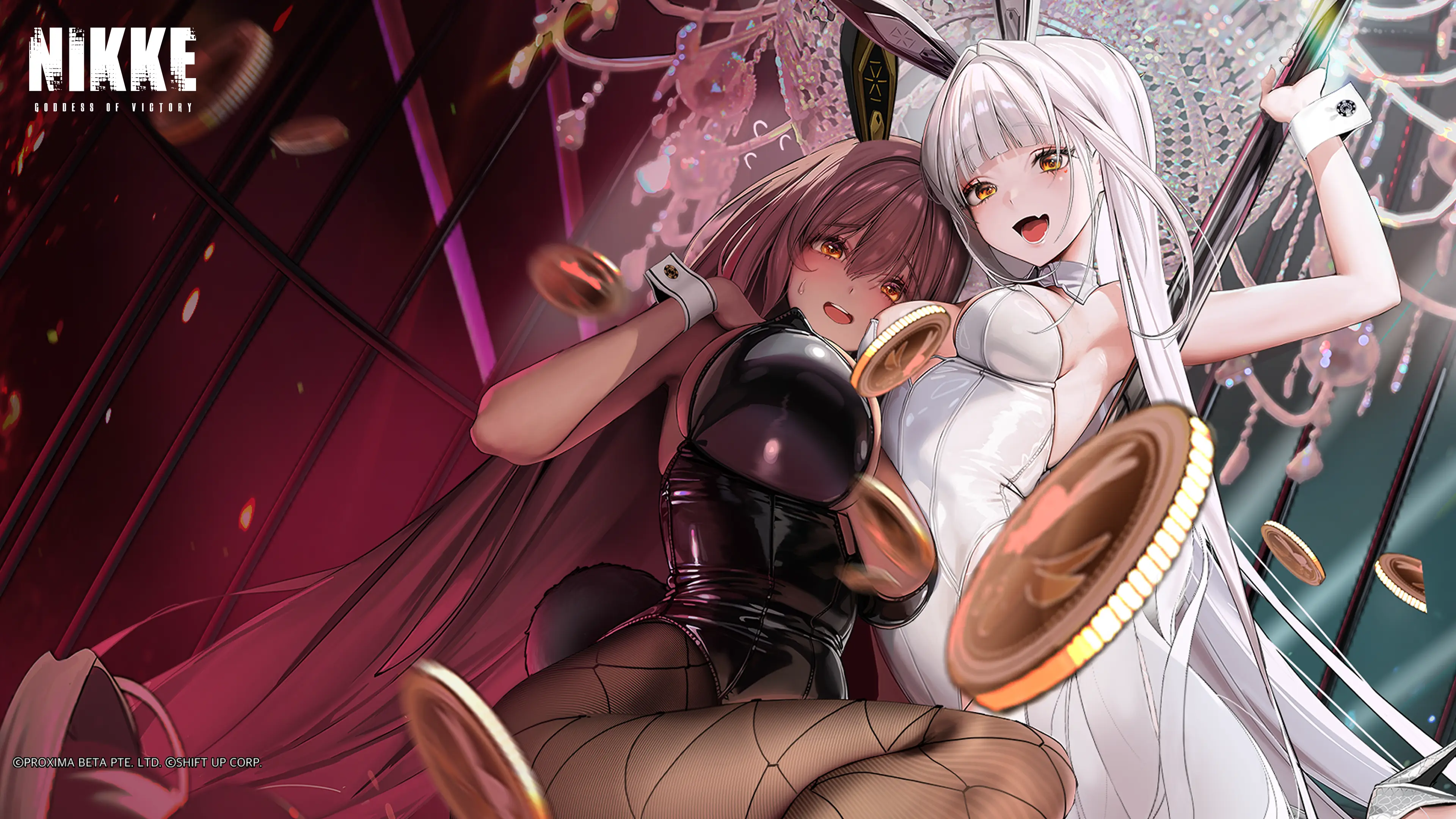
even banners. Running simultaneously. After the June 11, 2026 Ark Ranger update, that’s what Commanders woke up to in NIKKE. And the community has been in full triage mode ever since. The question isn’t which banner to pull on. The question is how you protect your gem stash when every single one of those banners is designed to feel urgent.
That’s not a coincidence. It’s a monetisation strategy. And whether you’re deciding which NIKKE recruitment pool to commit to or figuring out where to put real CAD on the line, the underlying discipline is identical: vet what you’re walking into before you spend anything.
The Gem Economy Crunch Is Real. And So Is the Real-Money Version
Ark Ranger Black landing in the same update cycle as six other live banners is exactly the kind of pile-on that separates impulsive Commanders from systematic ones. If you’ve been saving gems for Ark Ranger Black specifically, those other six banners are noise. But they don’t feel like noise. They feel like opportunity cost.
The same pressure hits Canadian players when they’re choosing where to deposit real money. Dozens of casino sites, all advertising fast payouts and generous welcome packages, all pulling for your attention at once. The difference between a good choice and a bad one usually comes down to whether the platform has been properly vetted. A ranked breakdown of vetted platforms (source: https://businessexaminer.ca/victoria-articles/item/safe-online-casinos-canada/) cuts through that noise the same way a tier list cuts through 7 simultaneous banners. It tells you which options actually hold up when scrutinised.
The principle NIKKE’s best players apply every single update cycle: ignore the visual urgency, evaluate the actual value, only commit when the math works. That’s not a gacha-specific mindset. It’s a spending mindset.
Why Banner Overload Is a Deliberate Design Choice
The research on loot box spending from the National Institutes of Health is pretty clear: spending in randomised reward systems is consistently associated with problem gambling behaviours in a measurable subset of players. The 2022 study found the link held even after controlling for time spent playing. That’s not a moral judgement on gacha games. It’s a data point worth knowing.
Gacha games generate revenue by compressing urgency. Seven banners at once achieves a few things at the same time. It segments the player base. Whales can chase multiple targets, mid-spenders feel forced to pick one and potentially regret it, and free-to-play players feel perpetually behind. The Ark Ranger Black Sustained Damage bug that’s been circulating this week adds another layer: some Commanders are questioning whether it’s even worth pulling on a character with a live damage issue, which is a completely legitimate ask.
This is the version of due diligence that serious NIKKE players already practice. Check the bug reports. Check the tier placement. Check whether the rate-up is worth it at your current pity counter. Only then commit.
What “Safe” Actually Means in Both Contexts
Safe doesn’t mean boring. Safe means the system is transparent about its odds and treats your resources with respect.
In NIKKE, that looks like: knowing the SSR pull rate before you spend, understanding the pity system, checking whether a limited banner has a guarantee mechanic or not. The game publishes these numbers. A Commander who ignores them and spams multi-pulls on a 2% SSR rate without a pity counter is playing without information.
In Canadian online casinos, safe means licensed, audited, and operating under a framework that protects your deposits. Ontario’s BetGuard self-exclusion platform went live across all 45 licensed operators in May 2026. That’s a real structural safeguard. Alberta is rolling out its own open iGaming framework this year, modelled on Ontario’s competitive-operator system. The Canadian market is getting more regulated, not less. That matters when you’re deciding where to put real money.
The operators that survive scrutiny are the ones that publish their terms clearly: wagering requirements, withdrawal timelines, max bet caps during bonus play. The ones that bury those terms in a 47-page PDF are doing the gacha equivalent of not showing you the pity counter.
The Ark Ranger Budget Problem, Applied
Here’s a concrete scenario. You’ve saved 6,000 gems. Ark Ranger Black is your target. But you also want to check Centi’s current banner (still live after the skill adjustment notice this week), and there are five others competing for your attention.
A systematic approach: assign a ceiling. Say 4,500 gems for Ark Ranger Black, which gets you roughly 150 pulls at standard cost. That’s your budget. The other banners don’t exist until that decision is made. If Ark Ranger Black doesn’t land by 4,500 gems, you either extend the ceiling deliberately or you stop and reassess.
Real-money casino play works exactly the same way. Set a deposit ceiling before you log in. Decide in advance whether you’re chasing a welcome bonus (and whether the wagering requirement is actually beatable at the max bet cap). I’ve withdrawn from sessions early because the bonus terms flipped to unfavorable at a certain table stake. That’s not discipline born from nowhere, it’s practice from having done the math wrong a few times first.
The difference between a controlled session and a blown bankroll is almost always whether the ceiling existed before the session started.
SSR Rates, RTP, and the Transparency Test
NIKKE publishes its SSR rates. That’s worth acknowledging. Not every gacha game does, and a Texas A&M analysis of gacha monetisation practices noted that rate opacity is one of the primary mechanisms by which players lose track of spending. When a game hides its rates. Or buries them in a terms popup you’d need a law degree to parse. That’s a red flag.
Licensed Canadian casinos are required to publish RTP figures for their slots. Not always prominently, but the information has to exist. A 94% RTP slot is meaningfully different from a 96.5% one over volume. The same way a 2% SSR rate on a limited banner is meaningfully worse than a 4% rate on a standard one. Both require you to look the number up before you commit.
The NIKKE players who thrive long-term are information maximalists. They check the SSR rarity tier before pulling. They read the skill previews. They look at the bug reports. They don’t chase. They evaluate.
That discipline maps directly onto how the best real-money players approach casino selection.
FAQ
Why are 7 banners running at once in the Ark Ranger update? The Ark Ranger update on June 11, 2026 introduced simultaneous limited and standard banner rotations alongside Ark Ranger Black’s debut. Shift Network uses multi-banner cycles to drive spending across player segments. Whales pursue multiple targets, mid-spenders feel pressure to prioritise, and free-to-play Commanders face tighter gem management.
What’s the issue with Ark Ranger Black’s Sustained Damage? A bug confirmed this week shows Ark Ranger Black delivering slightly lower Sustained Damage than her skill description implies. The development team has acknowledged it. Whether it affects her pull-worthiness depends on your team composition. Check the nikke.gg bug post for the damage delta numbers before committing gems.
How does pity work in NIKKE’s current banner structure? NIKKE’s pity counter accumulates across pulls and guarantees an SSR at a set threshold. Critically, the counter doesn’t always carry over between banner types. Limited banners and standard banners may track separately. Confirm carry-over rules before splitting gems across multiple active banners.
Is the comparison between gacha spending and online casino play actually fair? Fairly, yes. With caveats. Both involve randomised reward systems, resource allocation under psychological pressure, and rate transparency as a trust signal. The key difference is that regulated real-money gambling has legally enforced consumer protections, while gacha games operate under looser frameworks in most jurisdictions.
What makes a Canadian online casino genuinely safe to use in 2026? Licensing under a recognised framework (Ontario’s iGaming Ontario system is the current benchmark), published RTP figures, transparent bonus terms, and sub-72-hour withdrawal timelines are the baseline. Ontario’s BetGuard platform, which launched May 2026 across all 45 licensed operators, adds another layer of player protection that offshore sites can’t match.
—
The Ark Ranger update is a stress test. Seven banners at once, a live bug on the headline SSR, and a player base trying to figure out whether to commit or save for the next cycle. That’s not a comfortable position. But it’s a useful one. The pressure teaches you to evaluate before you spend, not after.
The same lesson applies when Canadian players step outside NIKKE and look at real-money platforms. The ones that publish their numbers, operate under a licensing framework, and don’t bury their terms are the ones worth your time. The ones that manufacture urgency without transparency are doing the same thing a hidden-rate gacha banner does.
Gambling involves real risk. Play responsibly and only deposit what you can afford to lose. If gambling stops being entertainment and starts feeling like a problem, reach out to BeGambleAware.org or call 1-800-GAMBLER.